Show sponsored by

In 1934, Franz Lehár, composer of The Merry Widow, was at the height of his fame. The premiere of Giuditta at the Vienna State Opera was broadcast live on over a hundred radio stations around the world… On the eve of World War II, Europe gave a triumphant reception to this joyfully apocalyptic music, a “musical comedy” with a libretto by Paul Knepler and Fritz Löhner-Beda.
A singer and dancer at the Alcazar cabaret, this beautiful and mysterious heroine is the Marlene Dietrich of opera – as seen in the movies Morocco and The Blue Angel. With Giuditta – the swan song of the composer and indeed of an entire era – Viennese operetta draws closer to opera, and Lehár to Puccini. Giuditta resembles Tosca in the depth of her passion, or Carmen in her demand for freedom. The South of France, a cruise ship voyage, Morocco: the various settings of the action enable Lehár to give free rein to the many charms of his art, ranging from Viennese waltzes to light, appealing melodies, lush orchestration tinged with exoticism, along with the sensual lyricism of the grand arias. A world away from boring clichés and brimming with contrasts, the music and story culminate in a surprising bittersweet ending.
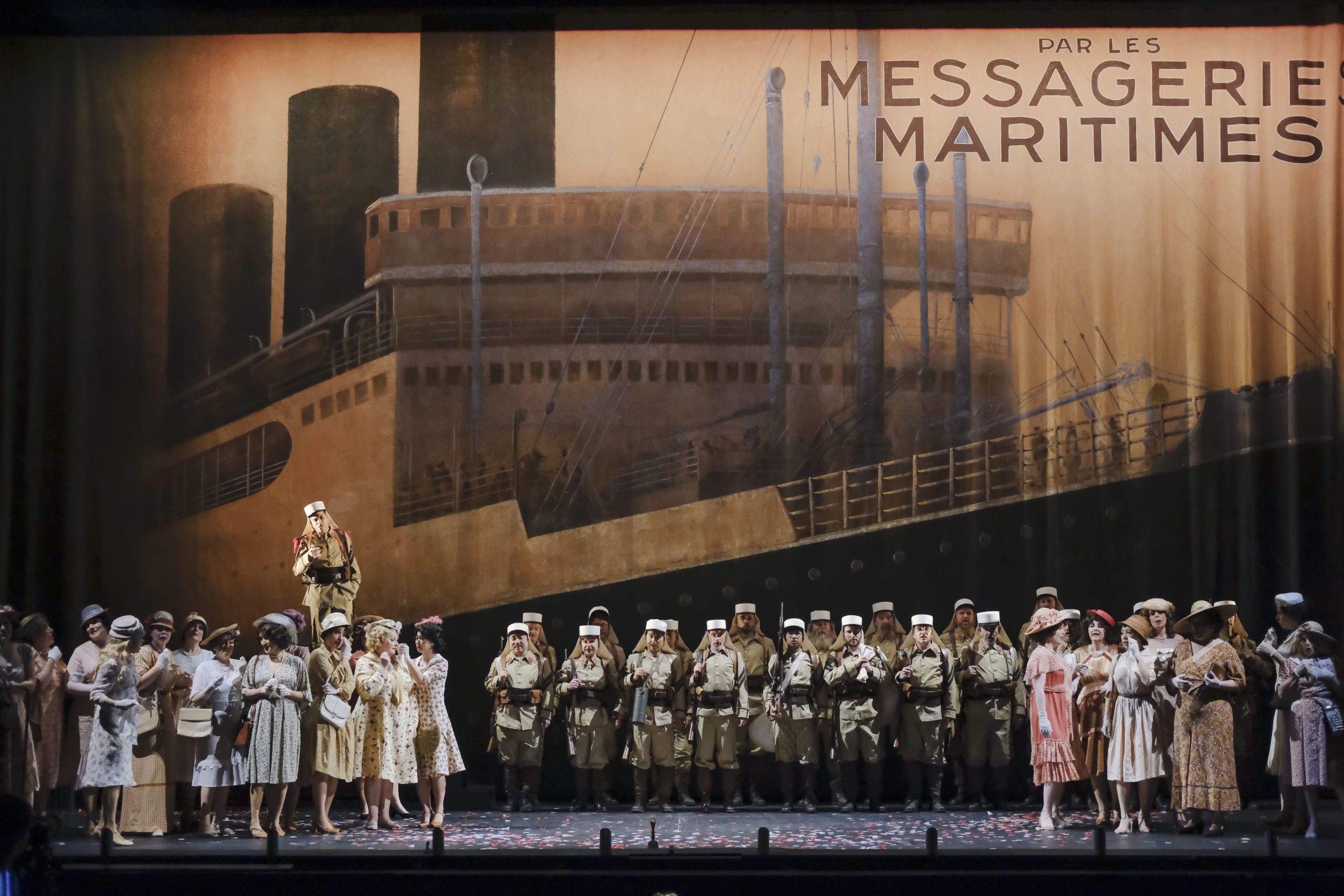
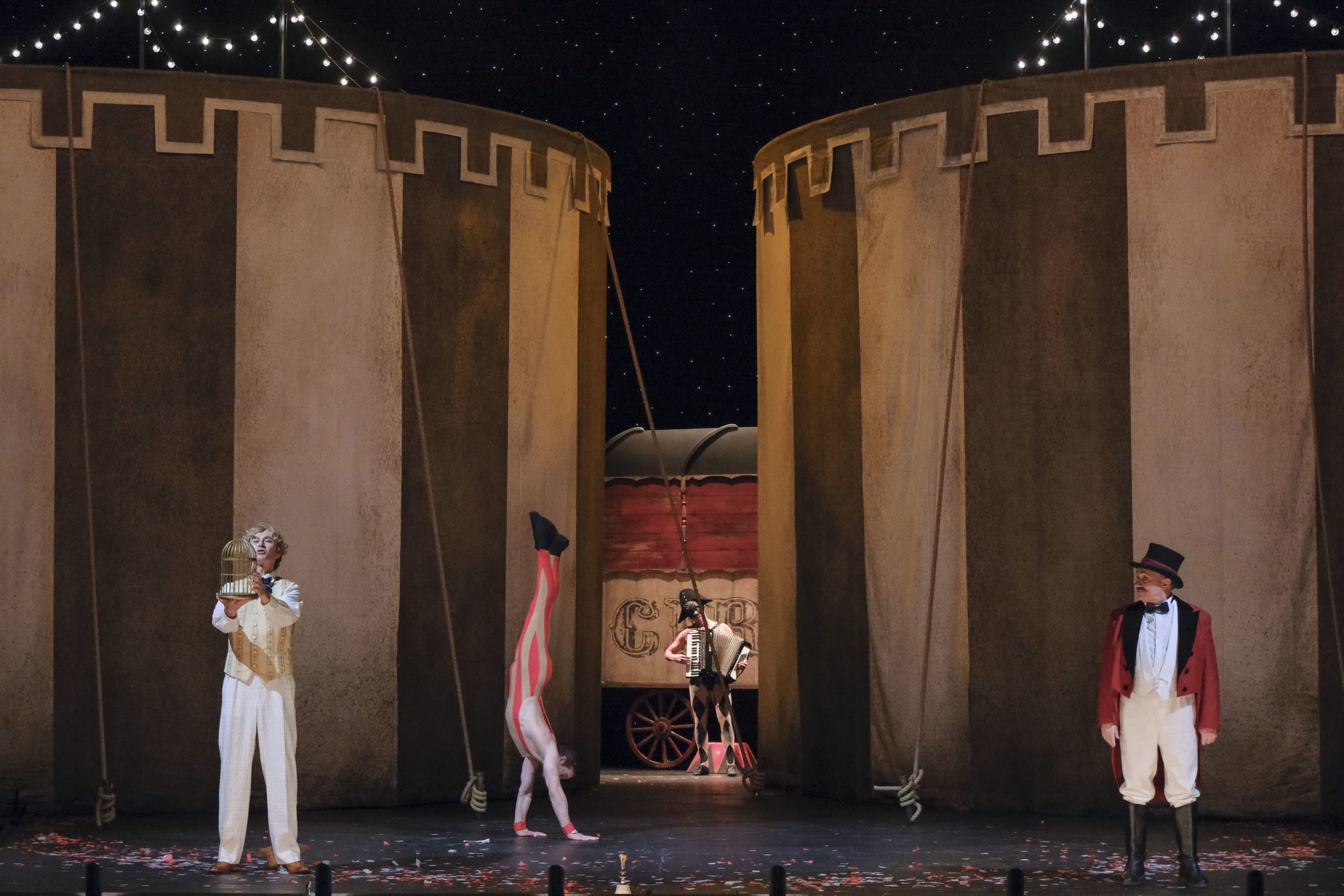
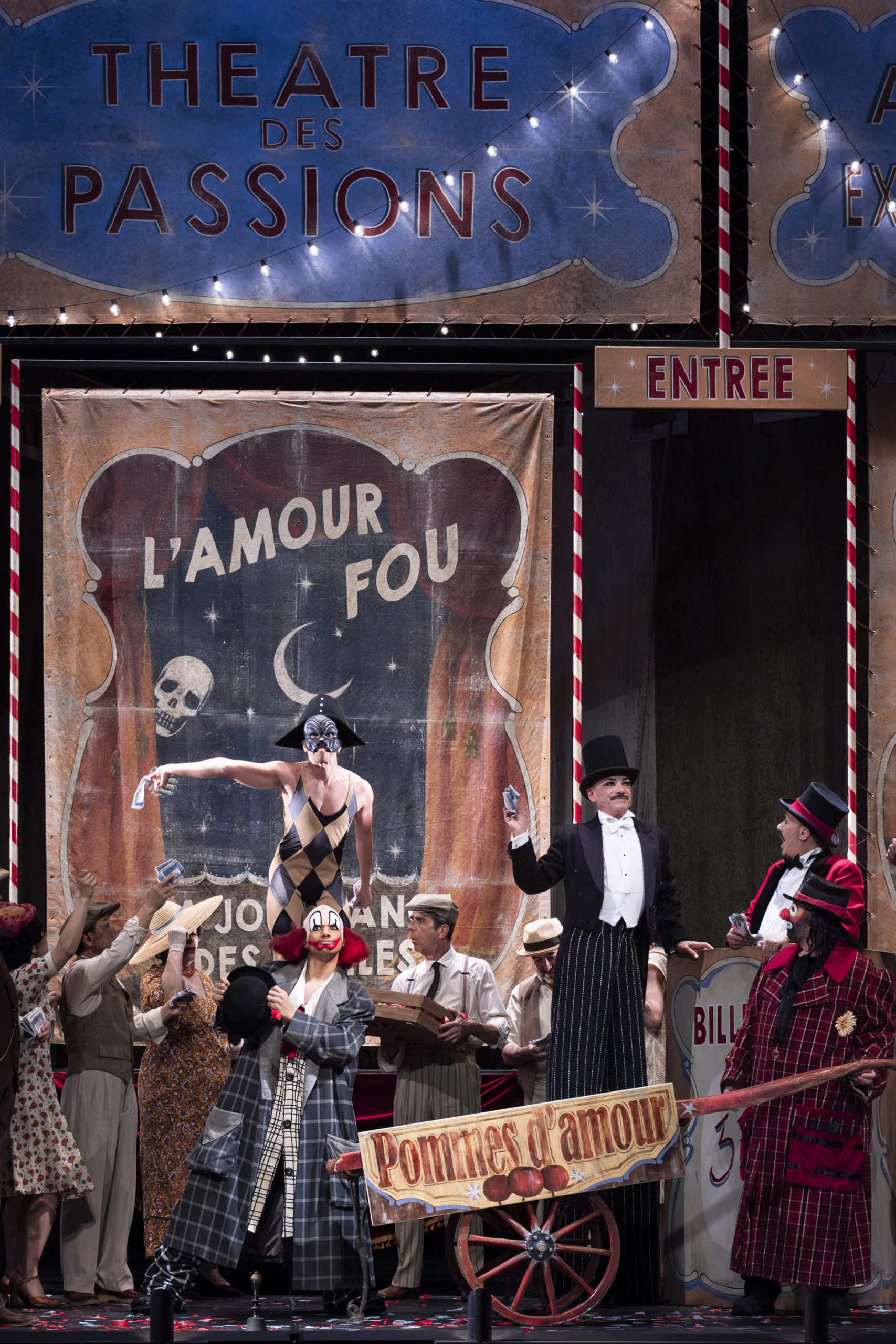
Pierre-André Weitz’s flamboyant and inventive staging will transport us to the realm of 1930s circus and cabaret. A connoisseur of this repertoire, Viennese conductor Thomas Rösner will be making his debut at the Opéra de Lausanne, conducting the Sinfonietta de Lausanne in the French version of this spellbinding rarity.
Premiere on January 20, 1934, at the Vienna State Opera in Vienna
© KARCZAG EDITIONS
Sinfonietta de Lausanne
Opéra de Lausanne Choir
Choir Conductor Anass Ismat

Pierre-André Weitz fait ses premiers pas sur scène au Théâtre du Peuple de Bussang à l’âge de dix ans. Il y joue, chante, fabrique et conçoit décors et costumes jusqu’à ses vingt-cinq ans. Parallèlement, il étudie l’architecture à Strasbourg et rentre au Conservatoire d’art lyrique. Pendant cette période, il est choriste à l’Opéra national du Rhin. En 1989, il rencontre Olivier Py. Il réalise depuis tous ses décors et costumes. Il signe plus de 150 scénographies avec divers metteurs en scène, au théâtre comme à l’opéra (Jean Chollet, Michel Raskine, Claude Buchvald, Jean-Michel Rabeux, Ivan Alexandre, Jacques Vincey, Hervé Loichemol, Sylvie Rentona, Karelle Prugnaud, Mireille Delunsch, Christine Berg…). Cette recherche sur l’espace et le temps le pousse à se produire comme musicien ou comme auteur sur certains spectacles. Il enseigne la scénographie depuis plus de vingt ans à l’École supérieure des arts décoratifs de Strasbourg. Dernièrement, il a mis en scène Les Chevaliers de la Table ronde et Mam’zelle Nitouche, deux productions du Palazzetto Bru Zane.
À l’Opéra de Lausanne : La Vase de parfums (2005) et L’Amour vainqueur (2022).
Après ses début avec Pierre Barrat à l’Atelier lyrique du Rhin de Colmar, il chemine avec Fran- çois Tanguy et le Théâtre du Radeau pendant quelques années. En 2000, il retrouve Pierre André Weitz, qu’il avait rencontré lors d’une création au Théâtre du Peuple à Bussang en 1988 ; ce dernier lui présente Olivier Py. Depuis cette date, il réalise pour eux les lumières de leurs spectacle de théâtre et d’une soixantaine d’opéras en France et à l’étranger. Il a aussi créé les éclairages pour d’autres artistes tels qu’Ivan Alexandre, Pierre Lebon, Jacques Vincey, Kidjo et Isabelle Huppert au Festival d’Avignon
Originaire du Piémont, Ivo Bauchiero a suivi sa formation de danse à Turin, étudiant d’abord le jazz et la danse classique, qu’il intègre ensuite à la danse contemporaine, à la danse-théâtre et aux danses de caractère. Il se forme notamment aux techniques Graham, Horton, Mattox, Cunningham et Ailey. Il enrichit sa pratique en s’essayant aux disciplines du cirque et aux danses aériennes. Il débute sa carrière professionnelle à Rome. Après de nombreux projets dans la péninsule, il s’installe à Paris et rayonne depuis là à travers la France et l’Europe, foulant également les scènes d’autres continents au gré de spectacles, comédies musicales, opéras, opérettes, films, vidéoclips et concerts. Danseur, assis- tant metteur en scène et chorégraphe, il intervient dans des émissions de télévision de la Rai, de Mediaset et de chaînes françaises, ainsi que dans de grands théâtres et événements tels que le Teatro Regio de Turin, la Biennale de la danse de Venise, la Scala de Milan, l’Opéra de Paris, le Théâtre des Champs-Élysées, le Théâtre du Châtelet, l’Opéra Comique, l’Opéra de Bordeaux, le Grand Théâtre de Genève, le Théâtre du Capitole de Toulouse, l’Opéra de Monte-Carlo, l’Opéra de Montpellier et La Monnaie de Munt.
Après un premier prix de piano, la soprano franco-allemande Camille Schnoor se forme à l’art vocal à Paris. Elle remporte le Premier Prix, le Prix du public et le Prix de l’orchestre lors du Concours International Vokal genial 2013 à Munich. Membre de la troupe de l’Opéra d’Aachen, elle chante, entre autres, le rôle-titre dans Luisa Miller, Agathe (Der Freischütz), Maria (West side story), Marenka (La fiancée vendue) ainsi que le rôle principal dans Au monde, le dernier opéra de Philippe Boesmans. Depuis 2016, Camille Schnoor fait partie de la troupe du Staatstheater am Gärtnerplatz de Munich où elle interprète Julie dans Liliom, une création de Johanna Doderer, Die erste Dame (Die Zauberflöte), Donna Elvira (Don Giovanni), Mimì (La bohème), ainsi que Hanna Glawari (La veuve joyeuse). En 2018, elle fait des débuts très remarqués dans le rôle de Cio-Cio-San (Madama Butterfly) à Limoges et à Rouen. En concert, elle chante Le poème de l’amour et de la mer (Chausson), le Requiem de Verdi, le Gloria de Poulenc et la deuxième symphonie de Mahler. En projet : le rôle de Hilda (Sigurd) à Nancy, les Vier letzte Lieder de Strauss à Rouen ainsi que Marguerite (Faust) et le rôle-titre de Rusalka à Limoges.
Le ténor français Jean Miannay étudie le chant à Lausanne auprès de Brigitte Balleys, ainsi qu’à Berlin dans la classe de Scot Weir. Il se distingue dès 2018 lors du 4e Concours Raymond Duffaut, où il remporte le grand prix. Suite à cela il décroche différentes distinctions au Concours de Clermont-Ferrand, au Concours Kattenburg, ainsi qu’au 2e Concours international de musique de Vienne. Sa voix de jeune lyrique l’amène à interpréter des rôles comme Tamino (Die Zauberflöte), Ferrando (Così fan tutte), Beppe (Pagliacci), Nemorino (L’elisir d’amore), Alfredo (La traviata), Vincent (Mireille), ou encore Des Grieux (Manon). En 2018, il fait ses premiers pas à l’Opéra de Lausanne, où il se produit régulièrement par la suite. Il chante en France aux opéras de Massy, d’Avignon et de Clermont-Ferrand, ainsi qu’aux Chorégies d’Orange pour la quatrième année consécutive. En 2022, il fait ses débuts en Allemagne au Theater Magdeburg dans une production d’Orpheus in der Unterwelt. De nature curieuse, il s’épanouit également dans la création contemporaine ainsi qu’en musique de chambre. Il chante notamment Les Illuminations et la Sérénade pour cor et ténor de Benjamin Britten, le Journal d’un disparu de Janáček et la Dichterliebe de Schumann. Il est attendu cet été en Remendado (Carmen) aux Chorégies d’Orange et intègre l’Opéra Studio du Rhin pour la saison 2023/24.
À l’Opéra de Lausanne: Cendrillon de Pauline Viardot (2018), Les Contes d’Hoffmann (2019), Rinaldo (2020), L’Auberge du Cheval-Blanc (2021), Semiramide, Eugène Onéguine et L’elisir d’amore (2022).